
The world of tourism is going through a moment of deep reflection.
One of the major challenges highlighted by this situation is how the tourism industry is built entirely around a discretionary asset: most people do not have to travel, they choose to.
For this reason, until a peak is reached and there is no evidence of a substantial “turning point” in terms of infection and mortality rates, it will be difficult to see the structural changes needed to get the business back on track in the short term.
The spread of the virus has focused in particular on the globalized nature of international tourism and how the sector can be affected very rapidly. This rapidity has also distinguished the growth curve of global tourism, identifying it as one of the most significant driving forces that have driven the world economy since the 1950s. As can be seen from the graph below, the fast reactivity of the tourism industry has enabled it to overcome numerous difficult moments, from September, 11th 2001 until the financial crisis of 2008.
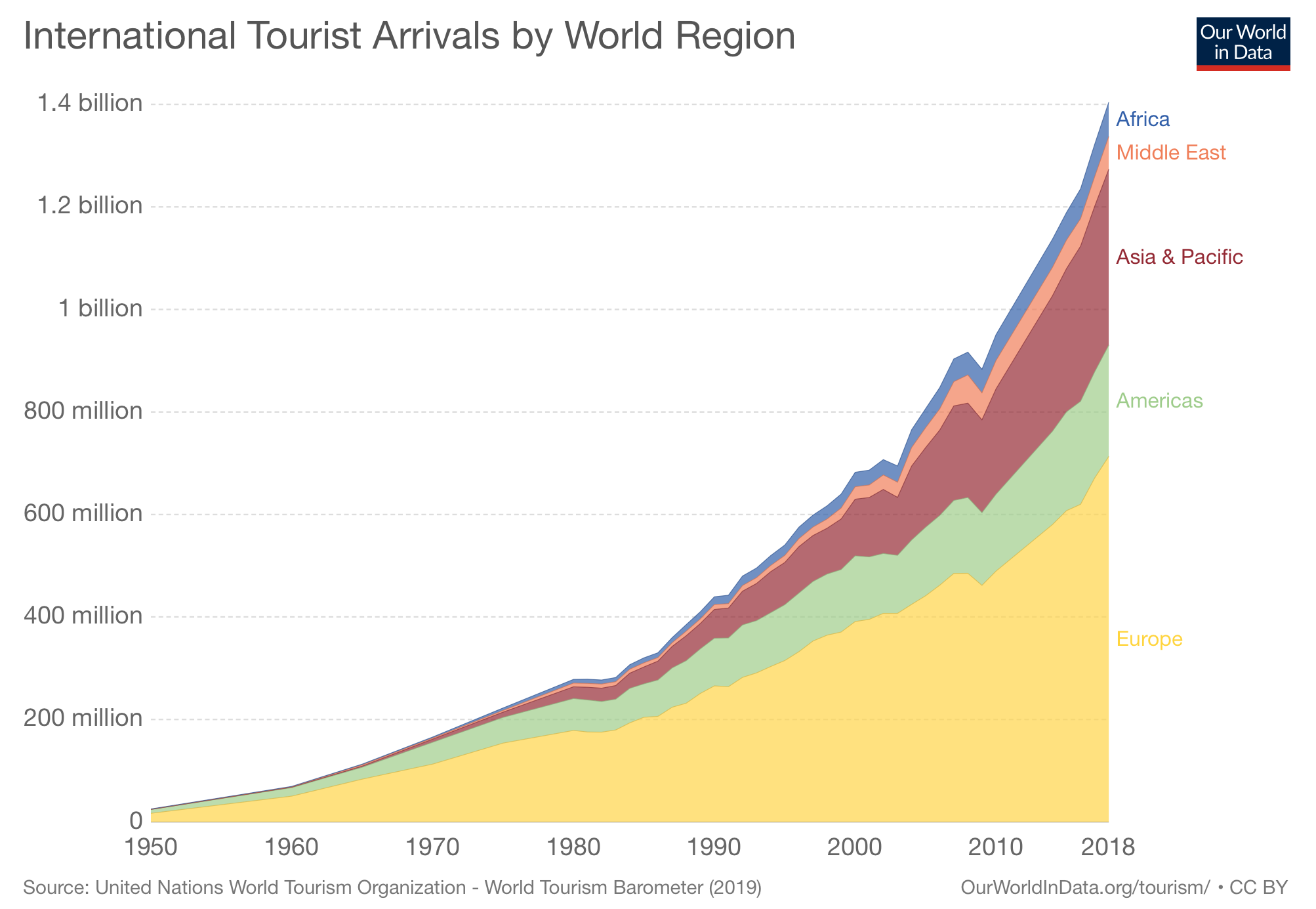
These numbers and this trend give us a clear message: tourism is a driving force in the world economy that overcomes every crisis, becoming stronger and stronger.
For these reasons, and beyond the economic and financial components that impact and will impact this industry, this moment gives the hospitality business an important opportunity: to think already about how to start again, and how to do it in the best possible way.
Although it may now appear far away in time, the management of the post-Coronavirus syndrome will be an extremely delicate moment for the tourism industry, as it will have to act simultaneously and quickly on multiple fronts:
- restoring confidence and providing reassurance to both internal and external tourists
- gather key stakeholders to support recovery efforts
- develop a re-evaluation strategy that will differentiate the country in the medium to long term
Here are five suggestions from the Hospite team:
COOPERATION ≠ COMPETITION
An important challenge for the hotel industry of tomorrow will be to build, at local and national level, an industrial fabric more oriented towards collaboration between companies rather than competition. This will enable the industry to spread quickly, spread the costs for the investments that will be needed and restore a medium-term balance that will bring economic benefit to the entire community. It is a great leap in mentality that this moment suggests to us, reminding us that the common good is and must be the primary driver compared to the interest of the individual, even in this sector.
APPRECIATION OF THE HUMAN BEING
With the aim of restoring confidence in both foreign and domestic markets, the enhancement of the guest and the professionals who are assigned to their service will be fundamental. The leading companies of tomorrow’s tourism will be the ones who will put the human being at the center, valuing both hospitality as a highly specialized profession to choose from and providing professionals who decide to return and continue their careers in this industry with the right training support to qualify them and make them grow.
ENHANCEMENT OF RESOURCES
The upturn will happen, and it will be up to tomorrow’s leaders to start planning and supporting consistent and functional strategies to encourage it. Strategies that have to leave aside the fact that we own a large part of the world’s artistic and cultural heritage, that have to put aside the assumption that “tourists will come” and that they can focus on ecology between “knowing”, “knowing how to be” and “knowing how to value”.
Every company, every professional and every person will have a key role in this, for the revival of our territory and for the creation of a new national tourism identity.
DIVERSIFY
In the search for strategies for the future, the constant comes from the analysis of the past, where the common thread is one: change. The risks that are currently emerging for companies are mainly those related to cash flow, organizational flexibility and the risk of dependency on a geographical market. For these reasons, a keyword for the future must be diversification, on multiple aspects: at the level of organization of internal resources, at the level of differentiation of target markets and at the level of creating new and structured business models that will guarantee a greater flexibility than the current ones.
SAFETY AS A DRIVER
One of the legacies that this situation will pass on to the future will be a greater attention from guests to all security aspects. For this reason, it will be very important not only to have an adequate system to protect the staff, guests, physical resources, property and personal belongings of the guest, but also to be able to effectively communicate the security of our facility and the service it offers.
Aware of the fact that like every other human phenomenon this situation has had a beginning and will have an end, allow this moment to contribute to increase, as a company, as an industry and as a species, our level of awareness.
This is the great opportunity that this crisis offers, for everybody.
Have a good day,
Hospite Team