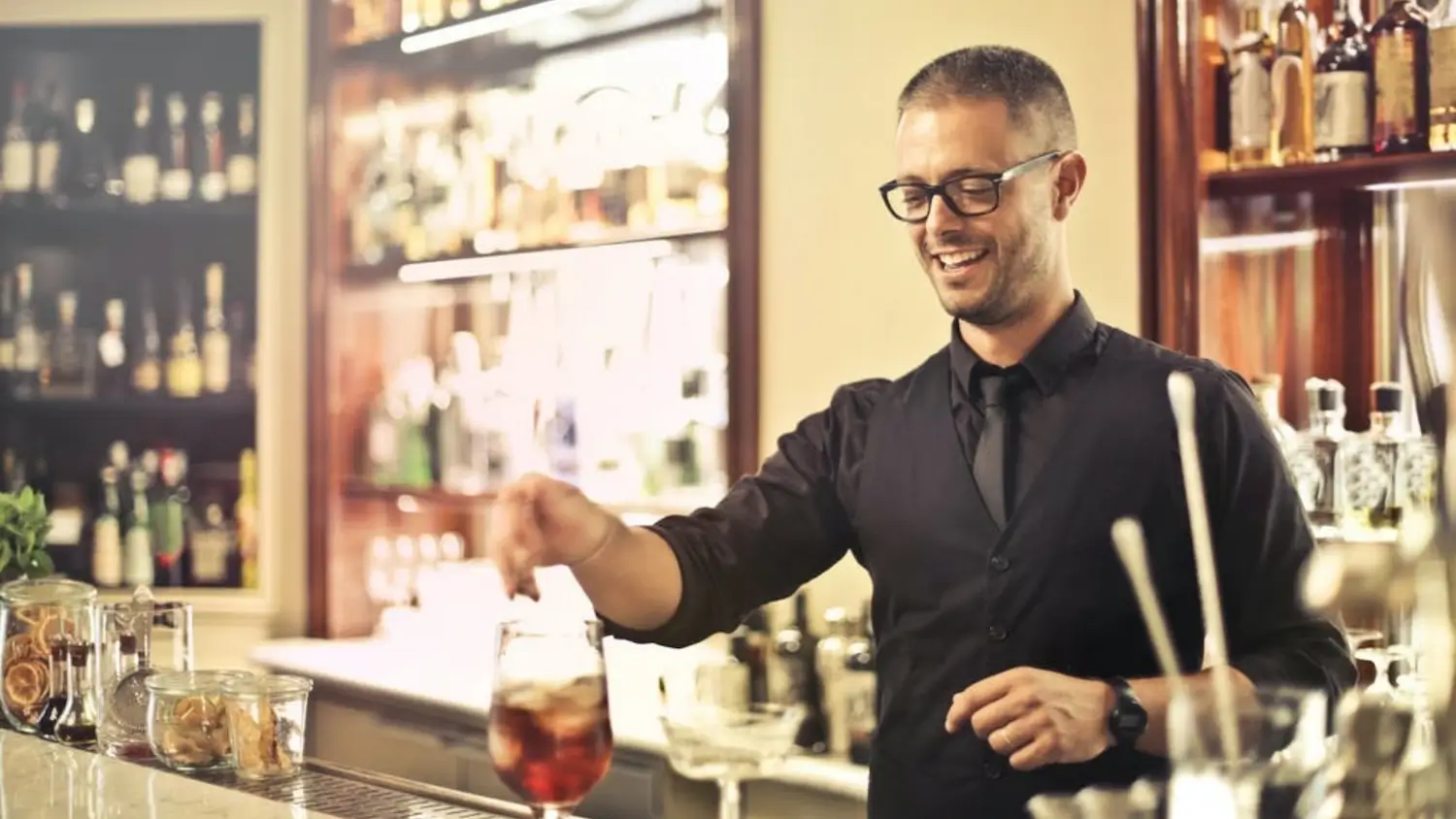
In these days, relational and communicative skills, also called soft skills, are needed more than ever to understand and manage the guests’ moods and to find the right way to excite them.
In order to improve the Guest Experience and make a difference despite social distancing, it is therefore essential to take communication to another level.
A global survey conducted by LinkedIn in 2019, which sees the contribution of managers and human resources professionals, showed that 80% of respondents consider soft skills increasingly important for business success and 92% say that they count as hard skills, if not more.
We can define soft skills as personal attitudes that allow you to do your job independently and effectively manage interactions with guests, colleagues and superiors regardless of your role. A person with these relational and communicative skills is able to understand when to speak and when to listen and to choose what to say and how. Soft skills are, at particular times such as the current one, what make the difference in areas in contact with the public such as hospitality.
In the recent months, we have seen how everyone reacts in a different way to new circumstances and how it is necessary to adapt quickly to the continuous directives’ updates. Precisely for these reasons, it becomes essential to become aware of our own emotions and how to express ourselves, in order to later acquire the sensitivity that allows us to customize the approach with each guest and make their experience exclusive.
The writer Maya Angelou said: “I learned that people can forget what you said, what you did, but they will never forget how you made them feel“. Emotions are what remain in the mind and leave a unique and special imprint to the relationship.
A guest returning to our property, writing a nice review and advising our structure to others, certainly does so because we were courteous to him: expectations, needs and requirements have changed in the last months and being able to inspire confidence and give security have become essential ingredients for a healthy and successful hospitality experience. Relational and communicative skills are required, precisely the staff ability to anticipate guests’ needs, to guide them in choosing the best alternative and to listen to them without filters and with a special sensitivity. These skills are mostly innate abilities, but they can still be acquired or enhanced through ad hoc training courses in order to master them and translate them into concrete skills.
In order to give our guests the comfort and feeling of being genuinely understood and to make them live unique emotions, we firstly need to increase our own communication style awareness, to be able to better understand them. Secondly, we need to learn how to use with clarity our language and sensory acuity, to understand and calibrate the linguistic, mental and behavioral patterns of both ourselves and our guests.
Let’s look at the 5 main attitudes that are needed to fully understand the state of mind and really excite our guest.
- Know yourself.
It means becoming aware of our own communicative style, train our self-perception, because everything starts from the way we see the world.
When our sensory acuity is refined, we can detect, for example, small important signals that the other person transmits. This allows us to modify our approach and to make the other person feel comfortable.
- Observe without judging
For many people it is difficult to observe in a neutral way because the habit of evaluating, judging and interpreting are firmly anchored. It seems obvious that you can observe without judging, but it is a skill that we are no longer so accustomed to use. It is necessary to train the ability to be really present in the situation we are experiencing without applying, to our interlocutor and to what he/she is saying, our parameters of judgment and value.
- Listen actively
It happens every day that for reasons of time, superficiality or our state of mind we find it hard to really listen to our interlocutor.
Listening actively can improve our everyday life by reducing misunderstandings and taking our communication to another level. In the 5 levels of listening the most frequent one is the internal dialogue: it means that while you are listening you are already thinking about what you want to answer or something else.
- Communicate with empathy
Language and communication skills are functional to express our humanity even in difficult conditions, to create lasting relationships, to solidify bonds and facilitate interaction.
Cognitive empathy means understanding and respecting the other’s points of view even if we do not agree on a logical level: for example we may disagree with a guest who complains about the small size of a room and at the same time we can be able to understand his discomfort from his/her point of view.
- Communicate effectively
It means being able to express ourselves in every situation with any interlocutor (both verbally and not) and in a clear and coherent way.
In order to make communication effective, we need to know the principles of communication, such as the responsibility that each one of us have in making our interlocutor understand our message. If the message is not understood, it is therefore necessary to reformulate it in order to make it more understandable to those who are interacting with us.
Our soft skills are therefore necessary not only to rediscover and develop our potential to stand out and be successful, but also to take care of the experience of our guests with greater effectiveness and awareness.
Helene Gallone
Content editor
Hospite – The Italian Hospitality Academy